

Looking for an Affordable Dentist in Spring? Explore Our New Patient Dental Package
Starting with a new dentist should give you more than a quick check of your teeth. It should help answer practical questions about your oral health: Are your gums healthy? Are older fillings or crowns holding up well? Is there decay that cannot be seen easily? Do you need treatment now, or is an area safe to monitor?
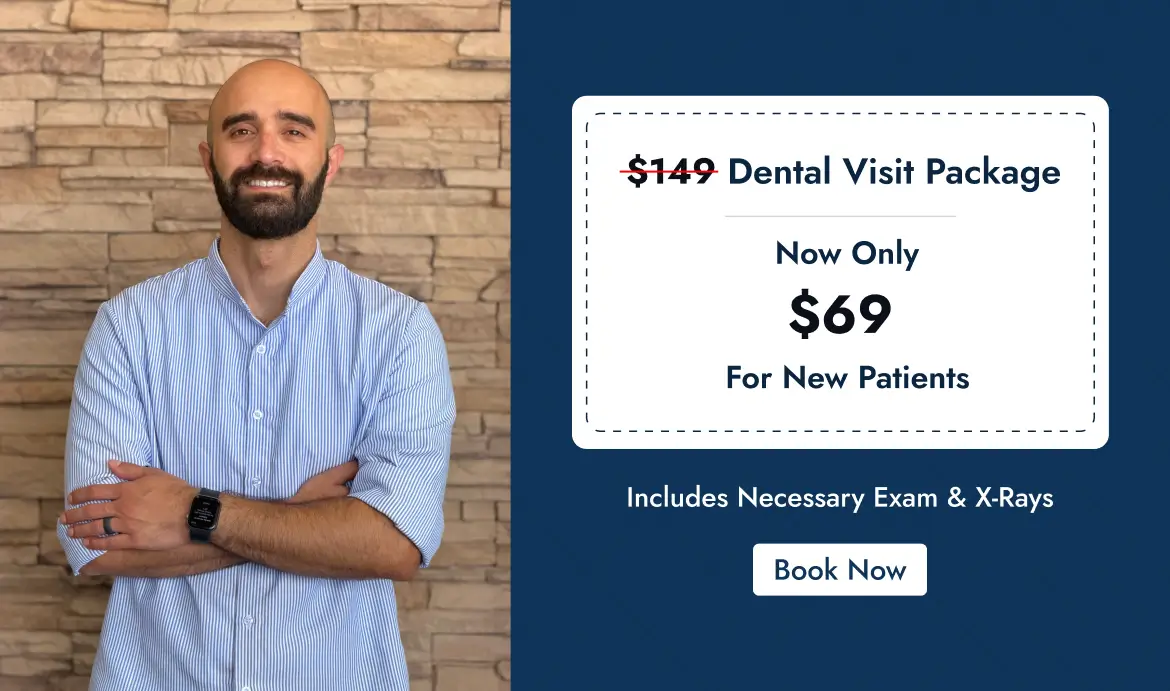
For someone establishing care with a dentist in Spring, TX, that first visit creates a useful baseline for future care. The current new patient dental special is $69 and includes necessary dental X-rays and an exam.
What happens afterward depends on what the dentist actually finds. Some patients may only need routine preventive care, while others may have an area that deserves further evaluation or treatment.
What Does the $69 New Patient Dental Package Cover?
A dental exam and X-rays provide different information about your oral health. The examination helps the dentist assess your teeth, gums, existing dental work, and symptoms, while necessary X-rays can reveal concerns that are not fully visible during the exam. With the dental X-rays and exams for $69 package, imaging is based on your dental history and diagnostic needs, and the condition of your gums helps determine whether routine cleaning or periodontal care may be appropriate.
Healthy-Looking Teeth Can Still Need Attention
Dental problems can develop before they cause pain. Regular preventive dental care helps identify early decay, gum changes, and concerns around existing restorations, while previous X-rays can show whether a finding is new or stable. When transferring care to a dental clinic in North Houston patients can access locally, sharing recent dental records may also help the dentist determine whether additional imaging is needed.
What If the Dentist Finds Something?
Finding a dental problem does not always mean immediate treatment is needed. The dentist considers the examination, X-rays, symptoms, and gum health to decide whether an area needs treatment or monitoring; for healthy gums, one of the dental cleaning benefits is removing hardened tartar that brushing and flossing cannot remove. If periodontal disease is suspected, gum measurements, bleeding, inflammation, and bone levels can help determine whether routine cleaning or periodontal care is more appropriate.
Care That Follows Your Oral Health Over Time
Ongoing visits with a dentist in North Houston make it easier to compare changes in your teeth, gums, restorations, and X-rays over time, helping the dentist decide what needs treatment and what can be monitored. The practice provides family dentistry and preventive and restorative care. In contrast, cosmetic dentistry options such as whitening, bonding, veneers, or alignment should be considered only after concerns such as active decay, periodontal disease, or structural damage are evaluated. Dr. Siro Atheer earned his D.M.D. from Boston University Henry M. Goldman School of Dental Medicine, and the practice reports more than 30 years of clinical experience along with the use of digital X-rays, intraoral cameras, and VELscope technology.
Questions New Patients Often Ask
Feeling comfortable does not rule out early dental changes. Decay, gum inflammation, tooth wear, and problems around existing restorations may develop before they cause noticeable discomfort.
Preventive visits allow the dentist to identify these changes and decide whether they need treatment, observation, or routine maintenance.
Yes. With appropriate authorization, your former dental office can generally transfer records and previous X-rays.
Recent images can give your dentist in Houston useful background when comparing earlier findings with your current examination. They may also help determine whether additional imaging would provide new diagnostic information.
The next step depends on what was found and how significant it is. The dentist may consider symptoms, examination findings, X-rays, previous treatment, and relevant risk factors before recommending care.
Some findings require treatment, while others may be monitored or evaluated further.
Dental X-rays use ionizing radiation, so there should be a clinical reason for taking them. Current ADA recommendations support selecting images based on the information needed for diagnosis and treatment, rather than routinely taking the same X-rays for every patient.
Digital radiography captures the image electronically so it can be reviewed as part of the examination.
Coverage depends on your insurance plan and the terms of the current offer. The practice website states that the office accepts major insurance but is not in-network with HMO plans.
Confirm your benefits and eligibility with the office before scheduling so you know how the package applies to your plan.
The practice website provides an online appointment request option and displays the current $69 offer.
When submitting your request, identify yourself as a new patient and confirm the package terms and eligibility with the office.
Your examination determines what should come next. The practice lists preventive, periodontal, restorative, implant, root canal, extraction, cosmetic, and clear aligner services.
Further treatment should be discussed only when it relates to your examination findings and individual oral health needs.
Some dental care requires more than one appointment. A nearby office can make follow-up easier when a tooth needs to be rechecked, treatment is completed in stages, or healing needs to be evaluated.
Consistent care also gives the dental team previous findings to reference when something changes.
A First Visit Should Give You Useful Answers
Price matters when you are choosing dental care, but the real value of an initial appointment comes from understanding what is happening in your mouth.
An examination and necessary X-rays can establish that starting point. Just as importantly, the discussion afterward should explain what was found, what can be monitored, and whether treatment is actually needed.
Houston Cosmetic & Family Dental currently offers the $69 new-patient package for necessary X-rays and an exam. Patients can contact the office or submit an online appointment request to confirm current eligibility and offer details before scheduling.
Clinical References
American Dental Association (ADA), X-Rays/Radiographs: ADA guidance supports selecting dental radiographs according to the patient’s history, examination findings, disease risk, symptoms, previous images, and diagnostic needs rather than relying on a fixed schedule for every patient.
American Dental Association (ADA), Home Oral Care: Preventive recommendations should reflect the patient’s oral health status and individual risk for dental disease.